

News > EU-Briefing on the Danish EU Council Presidency gives a first glance at “Europe at work”

EU-Briefing on the Danish EU Council Presidency gives a first glance at “Europe at work”
The bigger the challenge, the greater the interest: In cooperation with the Danish embassy, the European Commission Representation, and the German Federal Government, European Movement Germany looked ahead to the work programme of the Danish EU Council Presidency. More than 150 representatives of interest groups and public administration, who attended the event in Berlin, agreed on one point: “Europe at work” is a spot on slogan for the six upcoming months – and Denmark is a lucky strike for the challenges ahead.
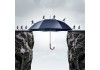
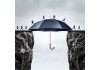
Dieter Spöri, president of EM Germany, opened the event with a metaphor: Denmark’s leitmotif for the following six month was to be a “bridge over troubled waters”. The conflict between the Eurozone with its various pressing concerns and countries not having the Euro with greater or lesser interest in a fiscal union was a “fortunate coincidence”, Spöri claimed. He furthermore emphasised – also in view of the current situation in Hungary – that one must not forget that the democratic fundament of the EU was weak, especially when the economic basis increasingly diminishes.
The Danish ambassador Per Poulsen-Hansen subsequently illustrated how his country would like to realise the designated bridge-building function: In order to prevent an increasing fragmentation of the EU during the debt crisis, the current presidency would focus on cooperation between countries. Therefore, special attention would be given to the implementation of regulations that were already agreed upon, like the Sixpack on the reform of the Stability and Growth Pact or the European Semester. The Danish priorities could be summed up as
- A responsible Europe – Amongst others, this is a reference to stronger market regulation and key decisions on the multiannual financial framework;
- A dynamic Europe – For the 20th anniversary of the internal market the presidency seeks to secure growth, employment, and competitiveness and to progress in the negotiations of the Doha Round;
- A green Europe – New incentives for energy and climate policies can be found on the Danish agenda, just like considerations in preparation of the UN Rio+20 conference;
- A safe Europe – Finally, Denmark proposes to revise the Schengen Area and to strengthen the European External Action Service.
Speakers from both the European Commission and the German Federal government, who commented on Poulsen-Hansen’s remarks, appreciated the Danish priorities. Matthias Petschke, head of the European Commission representation in Germany, emphasised that Denmark’s presidency coincided with the first full European Semester. Unlike in 2011, the EC’s Annual Growth Survey could already be presented in October last year. Based on these calculations, the March European Council would be able to decide on conclusions with country-specific recommendations. Furthermore the Sixpack, which entered into force just before the end of 2011, was finally implemented: The Commission took actions against Hungary on the basis of these regulations, as the country did not manage to decrease its budget deficit consistently. Petschke also referred to the priorities of the European Commission for the following six months, which included the negotiations on the envisaged Fiscal Pact and the 20th anniversary of the Internal Market.
Arndt Freytag von Loringhoven, representative of the German Federal Foreign Office for EU Affairs, commented on the guidelines for the Fiscal Pact. For the government, the compatibility of the pact with the EU Treaty was just as important as a high degree of commitment. The pact should also be related to the European Stability Mechanism in order to reconcile solidity and solidarity. The head of the Europe Department of the German Federal Ministry of Economics and Technology Claudia Dörr stated on the issue of economic growth that the government would closely monitor the standardisation of degrees and intelligent legislation over the first half of the year. The discussion, which was moderated by Deputy Secretary-General of EM Germany, Karoline Münz, also circled around the bridge-building function of Denmark as a littoral state of the Baltic Sea in the further development of the EU Baltic Sea Region Strategy and the implementation of the financial transaction tax. Finally, one thing is certain: Over the next six months, a number of events organised by EM Germany will provide excellent opportunities to observe “Europe at work”.
http://eu2012.dk/en
http://www.europaeische-bewegung.de/





















No comments